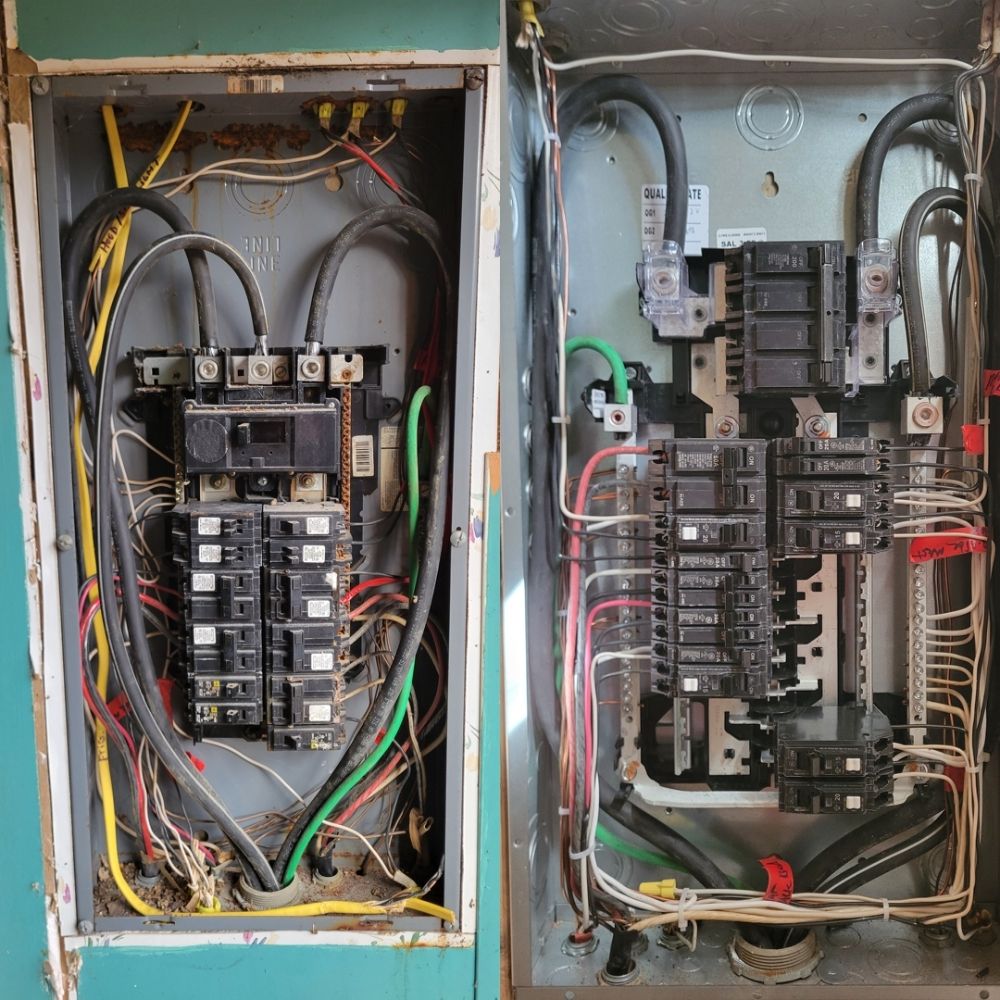
When your electrical panel actually needs to be replaced.
Three signs that distinguish a worn-out panel from a one-off tripped breaker, plus the recall-class brands no inspector will leave alone.
We get the same call about three times a week. “My breaker keeps tripping. Do I need a new panel?” Sometimes yes. Usually no. Here is how we tell the difference, and why a few specific brands of panel get replaced no matter what.
The first question: is the breaker tripping for a reason?
A circuit breaker has one job: open the circuit when the load exceeds its rating. If your kitchen breaker trips every time you run the microwave and the toaster at the same time, the breaker is doing exactly what it should. The fix is not a new panel. The fix is either reducing the load on that one circuit or running a new dedicated circuit for one of those appliances.
Most “my breaker keeps tripping” calls land here. We look at the panel, identify the offending circuit, run a quick load measurement, and recommend either a circuit add or load redistribution. Not a panel replacement.
The three signs the panel itself needs to be replaced
Sign 1: Multiple breakers tripping for no apparent reason
If breakers across the panel are tripping randomly, including ones that aren’t being heavily loaded, that’s different. It usually points to one of three things: failing breakers, a bus bar issue, or panel-internal damage from heat or moisture.
Breakers do fail with age, especially in panels installed before 1990. The internal trip mechanism wears out, springs lose tension, and the breaker either trips at currents below its rating or fails to trip when it should. Replacing individual breakers can buy you a few years if the panel itself is sound. But if you’re replacing more than three or four breakers in a panel, you’re better off replacing the whole panel , by the time you’re paying for parts and labor across multiple breakers, you’ve already spent half the cost of a service rebuild.
Sign 2: The panel feels warm to the touch, or you smell burning
This one is non-negotiable. A panel should not be warm. Power should flow through the bus bars and breakers without generating noticeable heat. If the cabinet is warm, something is wrong , usually a loose connection or a corroded bus bar. The “fix it before something burns” decision tree starts here. We come out same-day for these calls.
Burning smells are even more urgent. If anything in the panel smells hot or burnt, kill the main breaker if you can do so safely, and call. We treat these as emergency calls and roll the truck before lunch.
Sign 3: It’s a Federal Pacific, Zinsco, or Sylvania-Challenger panel
Three brands of panel are recall-class in East Tennessee. They were installed widely in the 1960s through the 1980s, and they all share a common defect: the breakers don’t reliably trip when they should. Specifically:
- Federal Pacific Stab-Lok , the breakers are notorious for failing to trip on overload, leading to fires. The CPSC investigated, the company defended itself, and the panels are technically still legal to use, but most insurance carriers in our region will no longer cover homes with them.
- Zinsco (also marketed as GTE-Sylvania Zinsco) , similar issue. Bus bars corrode, breakers fuse to the bus, and trip mechanisms fail. Visible burn marks on the bus bars are common.
- Sylvania-Challenger (1980s era) , same set of issues. Less common than the other two but still flagged by inspectors.
If your panel is one of these three, an upgrade is not optional. It’s the path to keeping your homeowner’s insurance and (more importantly) reducing the chance of an electrical fire. We do these swaps regularly across Sevierville, Knoxville, and the Smokies.
If your inspector flags a Federal Pacific or Zinsco panel, the path forward is replacement. Not breaker swaps, not maintenance, not “we’ll keep an eye on it.”
The age question: is my old panel “automatically” bad?
No. Age alone doesn’t kill a panel. We routinely service 30 and 40 year old panels that are still fine. What matters is whether the panel is functioning, whether the bus bars are clean, whether the breakers are tripping correctly, and whether the brand has a known recall-class issue.
That said, most 100A panels installed before 2000 in East Tennessee are now undersized for the loads modern homes carry. An EV charger, a heat pump, an induction range, a home office full of equipment , that adds up to more than a 100A service can support without constantly tripping. Even if the panel itself is mechanically fine, the upgrade to 200A is what most homeowners need.
What does a 200A panel upgrade cost in East Tennessee?
For a typical residential service rebuild, five things decide where your quote lands:
- Panel location. Inside the house = easier. Outside on the meter = harder if the meter base also needs replacing.
- Service drop. If the conductors from the utility to the meter are old or undersized, those need to be replaced too. Sometimes the utility does that work for free, sometimes they bill the homeowner.
- Inspection fees. Set by the county, and they vary more than people expect across East Tennessee.
- Permit fees. Also jurisdiction by jurisdiction, and we pull the permit either way.
- Surge protection. We recommend a Type 2 SPD on every panel upgrade. Bundled into the upgrade it is mostly just the device, and it is the cheapest insurance you’ll ever buy.
For more on what’s included on every panel upgrade, see our panel upgrades service page for the full scope.
The decision tree, simplified
If you’re trying to figure out whether your panel needs to be replaced, here’s the simplified version of how we think about it:
- Is the breaker tripping for a reason? If yes , that’s a circuit issue, not a panel issue. We can usually fix it without touching the panel.
- Is it a Federal Pacific, Zinsco, or Sylvania-Challenger? If yes , replace it. Insurance and safety reasons.
- Is the panel warm or burning? If yes , emergency call. Same day.
- Are multiple breakers tripping randomly? If yes , replacement is usually cheaper than chasing the failure across multiple breakers.
- Are you adding modern loads (EV, heat pump, induction, home office)? If yes and you’re on a 100A panel , upgrade to 200A is overdue.
If you’re still not sure, we’ll come out and tell you , for free. Call us and we’ll schedule a free on-site walk-through within the week.
Volt Pro Services is a licensed Tennessee electrical contractor based in Sevierville. We service the entire Sevierville-Knoxville-Smokies corridor with a 100-mile radius and same-day truck rolls on emergency calls.
More from the truck.
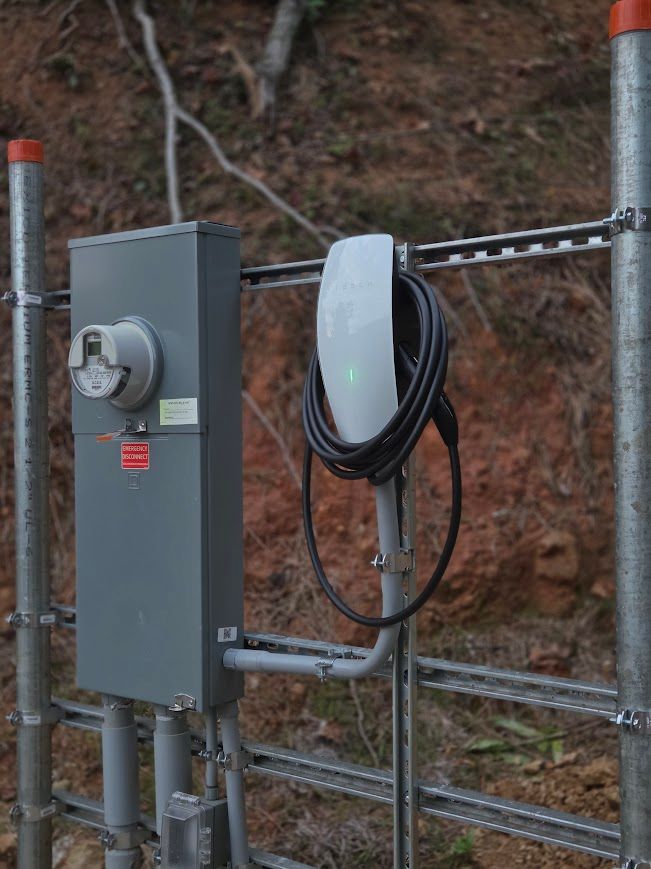
What a Level 2 EV charger install actually costs in East Tennessee
Itemized cost breakdown for Tesla wall connectors, J1772, NEMA 14-50 outlets , including permit, panel work, and load management.
Read full post
How to size a whole-home generator for a 3,000 sq ft Smokies cabin
A 30-minute load calc tells you whether you need a Generac 18kW or a 24kW. Here is how we run it on every install.
Read full post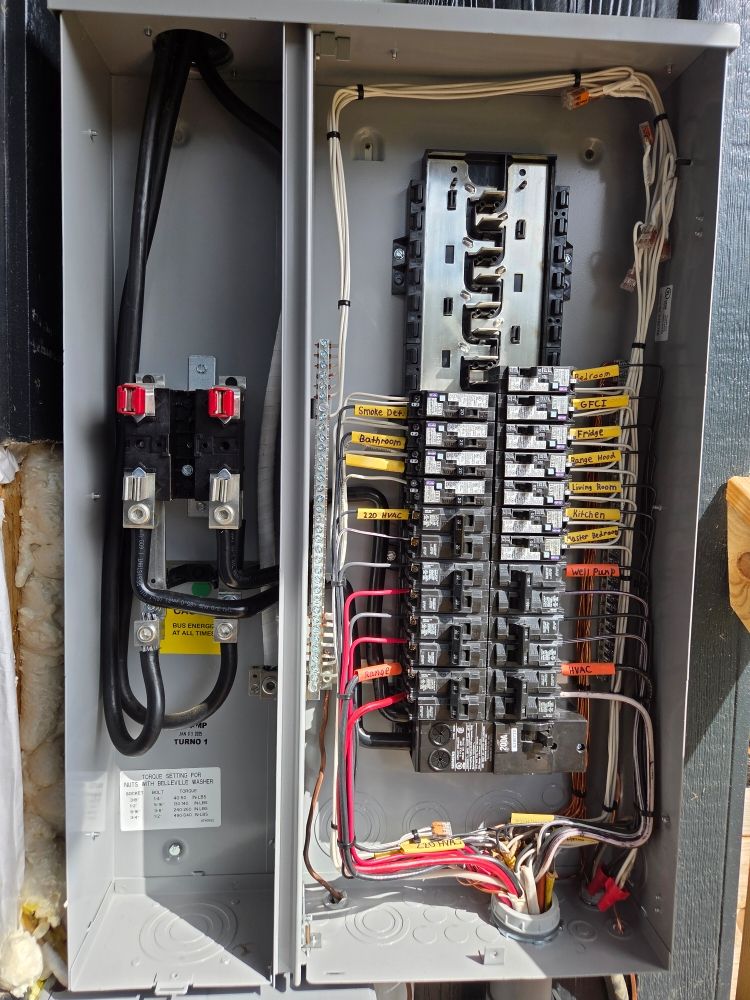
GFCI breakers and pre-1990s East Tennessee homes
Where code requires GFCI protection today, why your 1980s ranch is missing it, and what the retrofit actually costs.
Read full postQuestion this didn’t answer?
Email or call. We answer questions before we quote work.
If it shocks you, we got you. A licensed Tennessee electrician serving Sevierville, Knoxville, and the Smoky Mountains corridor since 2018.