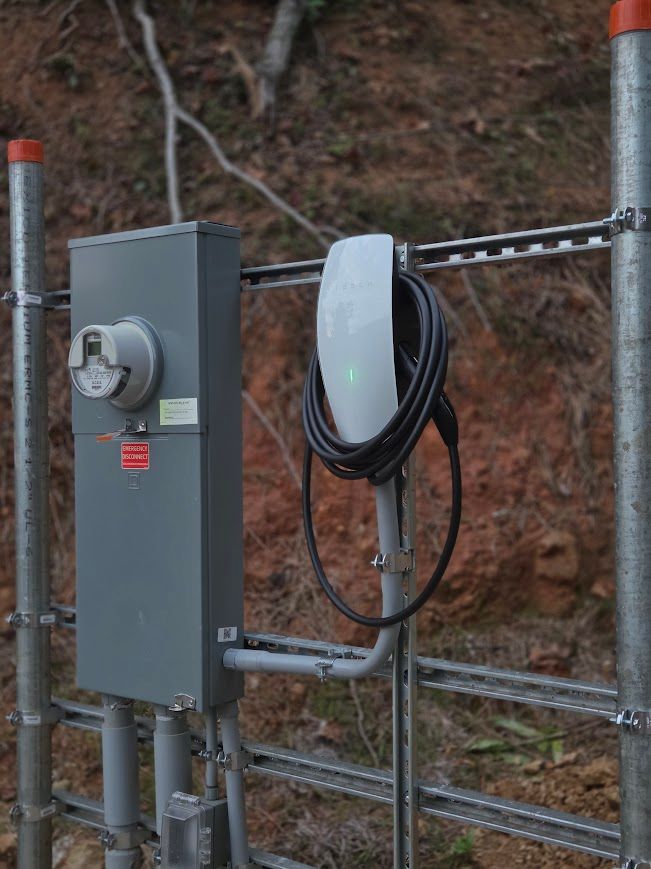
Commercial electrical maintenance checklist for Tennessee properties.
Itemized cost breakdown for Tesla wall connectors, J1772 universal chargers, and NEMA 14-50 outlets — including permits, panel work, and load management.
Annual: thermographic scan of the service entrance and main switchgear
An infrared thermographic scan of the service entrance, main switchgear, and panelboards under load identifies failing connections, loose lugs, and overloaded conductors before they fail catastrophically. NETA recommends annual IR scans on commercial systems; most Tennessee commercial insurance carriers now require them on properties over a certain size or load.
The scan takes 60-90 minutes per panel for a typical Knoxville or Sevierville commercial property. We deliver a written report with temperature deltas at each connection, photos of any hot spots, and a prioritized list of corrections (immediate, scheduled, or monitor-only). A connection running 30°F above ambient is monitor; 50°F above is scheduled; 80°F above is immediate.
Annual: transfer switch exercising and load test
Standby generators with automatic transfer switches need an annual full load test, not just a no-load start. The test: cut utility power, verify ATS transfers within manufacturer spec (10 seconds for Generac, 15 seconds for many Cummins/Onan units), run the property on generator for at least 30 minutes under real load, verify ATS returns cleanly when utility is restored.
Failing this test is one of the most common ways Tennessee commercial properties discover that their backup power does not actually work. The generator starts, transfers, runs at no-load fine — but under real load the engine governor cannot hold frequency, or the ATS retransfers prematurely, or the building loads exceed the generator’s real capacity because something was added since the last test.
Semi-annual: panel labeling and arc-flash hazard review
NFPA 70E requires arc-flash hazard labeling on every panel, switchgear, and motor controller in commercial spaces. The label has to reflect current short-circuit current available, working distance, and required PPE level. Properties that have had service changes, transformer swaps, or significant load changes need their arc-flash labels reviewed because the underlying study may no longer be accurate.
We review labels semi-annually as part of the maintenance plan and flag panels where the study needs updating. The arc-flash study itself is a separate engineering deliverable; the label review is preventative.
Quarterly: emergency lighting and exit sign testing
Tennessee fire code requires functional testing of emergency lighting and exit signs at least monthly (visual) and annually (90-minute load test). Most commercial property managers test visually but skip the load test, which is the test that actually catches failing batteries. A 90-minute load test simulates a real power outage and confirms the battery holds the rated runtime.
We run quarterly partial-load tests (30 minutes) plus the annual full 90-minute test as part of the Tennessee commercial maintenance plan. Failed units get logged, replaced under warranty where applicable, and re-tested.
Annual: GFCI/AFCI device testing and code review
GFCI and AFCI devices have a documented failure rate over time — UL data suggests 5-10% of GFCI receptacles fail to trip within 10 years of install. Annual press-the-button testing on every GFCI and AFCI device in the building (kitchens, bathrooms, exterior, mechanical rooms) catches the failures.
Code review is the companion task: every year we walk the property against the current Tennessee-adopted NEC edition and flag anything that has fallen out of code compliance (often AFCI requirements that have expanded since the original install). The flag becomes a planned remediation, not an emergency repair.
More from the truck.
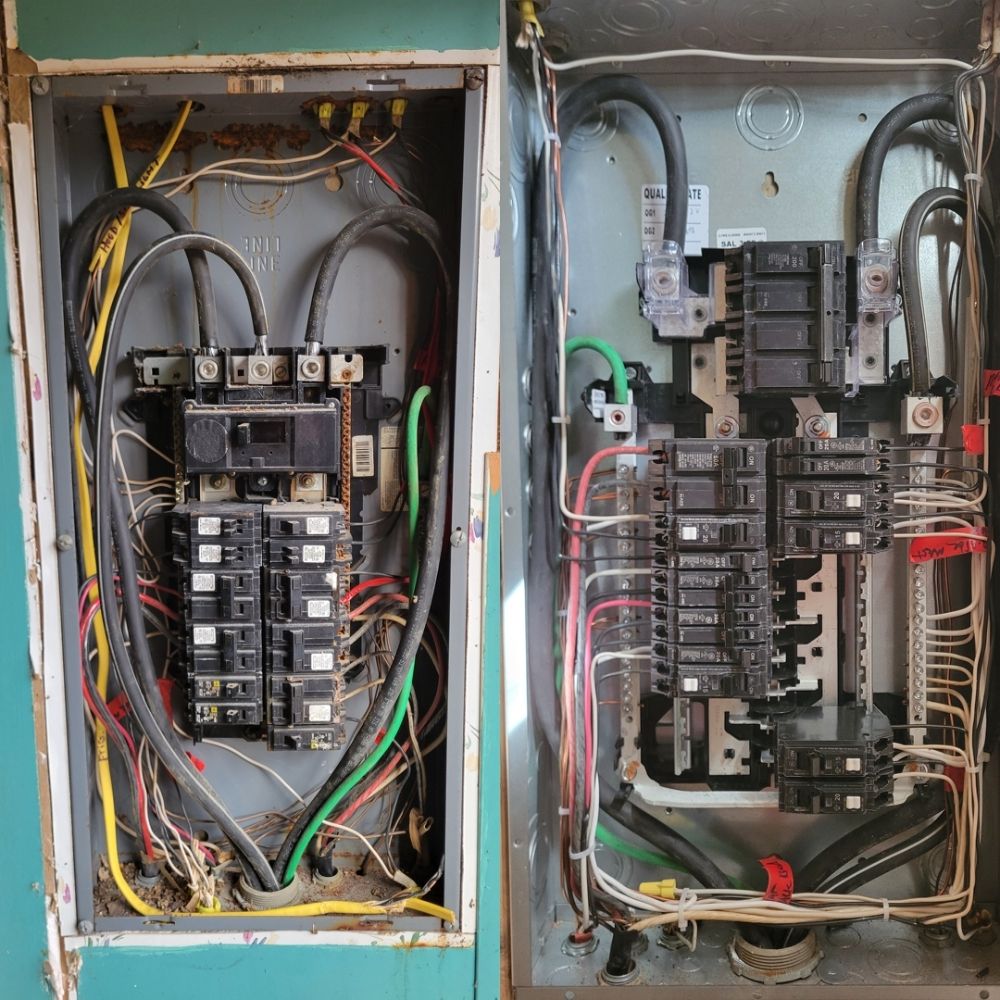
When your electrical panel actually needs to be replaced
Three signs that distinguish a worn-out panel from a one-off tripped breaker, plus the recall-class brands no inspector will leave alone.
Read full post
How to size a whole-home generator for a 3,000 sq ft Smokies cabin
A 30-minute load calc tells you whether you need a Generac 18kW or a 24kW. Here is how we run it on every install.
Read full post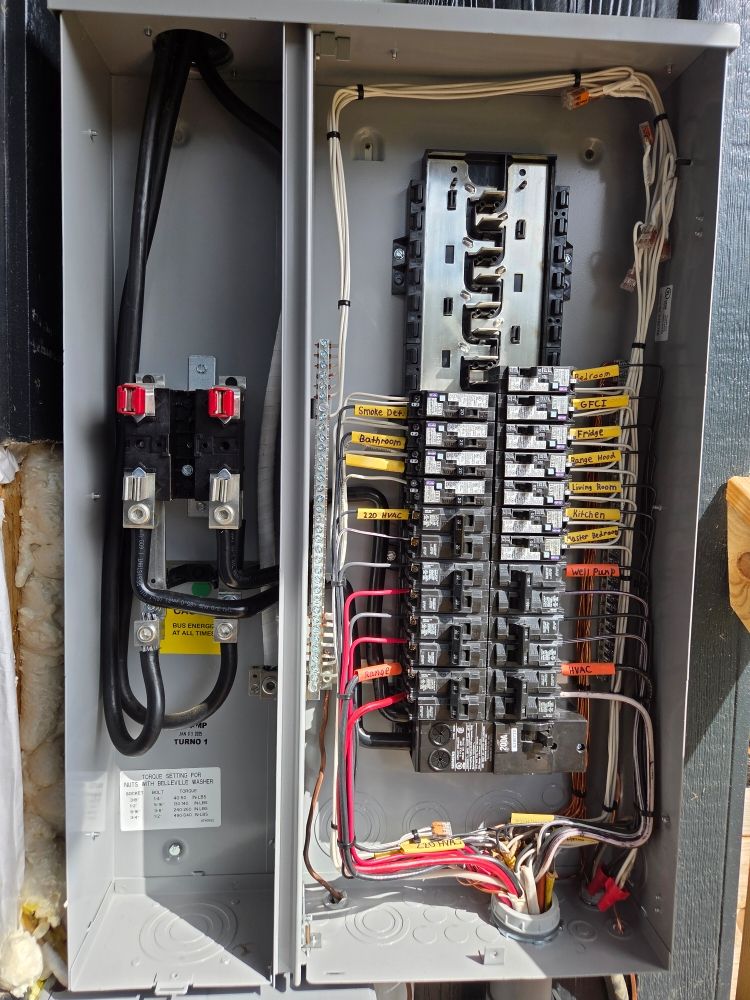
GFCI breakers and pre-1990s East Tennessee homes
Where code requires GFCI protection today, why your 1980s ranch is missing it, and what the retrofit actually costs.
Read full postQuestion this didn’t answer?
Email or call. We answer questions before we quote work.
If it shocks you, we got you. A licensed Tennessee electrician serving Sevierville, Knoxville, and the Smoky Mountains corridor since 2018.