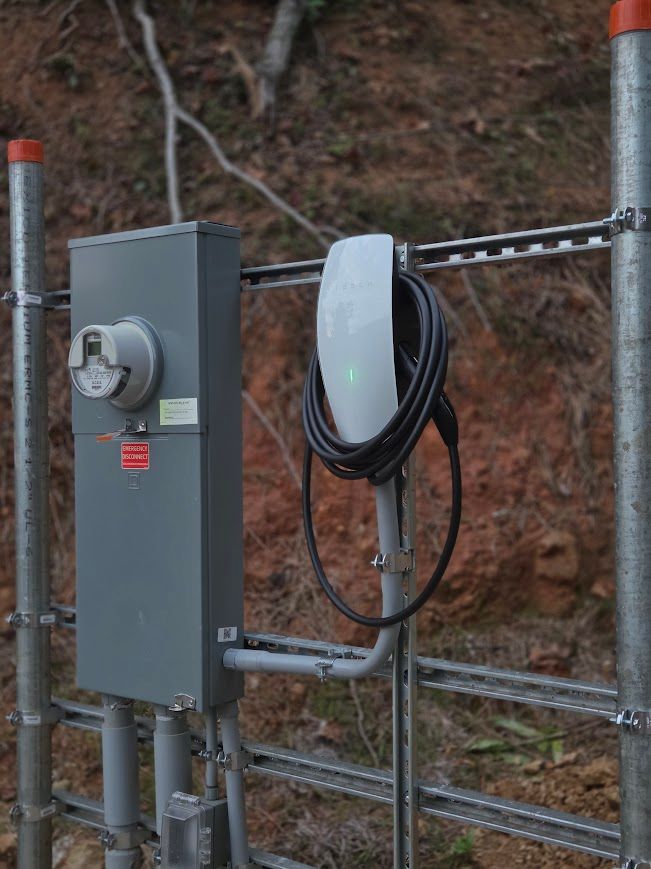
What a Level 2 EV charger install actually costs in East Tennessee.
Itemized cost breakdown for Tesla wall connectors, J1772 universal chargers, and NEMA 14-50 outlets , including permits, panel work, and load management.
The most common EV charger question we get is: “How much does it cost?” Every number you find online is a guess at somebody else’s house. What actually sets your number is which of three install paths you pick, how far the charger sits from the panel, and whether your existing service has room for the circuit. Here’s the actual breakdown of what we look at.
The three install paths and what separates them
Path 1: NEMA 14-50 outlet
The leanest path, because there’s no charger hardware in the scope at all. Run a 50A 240V circuit from the panel to the garage, terminate in a NEMA 14-50 outlet (the same outlet on RV sites). Plug your Tesla mobile connector or any portable Level 2 charger into it.
Pros: Least material in the job, more flexible (any future EV with a portable charger works), no charger hardware to depreciate.
Cons: Slower charging , the Tesla mobile connector is rated for 32A continuous, so you’re looking at about 30 miles of range per hour. For most overnight charging this is plenty, but if you’re driving 200+ miles a day it’s slow.
Path 2: J1772 universal hardline charger
A wall-mounted Level 2 charger that hardlines to your panel via a 50A or 60A circuit. The charger has a J1772 plug (or a Tesla adapter plug) and works with any modern EV.
Brands we install most: ChargePoint Home Flex, JuiceBox 40, EVoCharge, Wallbox Pulsar Plus.
Charging speed: 40A continuous = roughly 36 miles of range per hour. Faster than the NEMA 14-50 path.
Path 3: Tesla wall connector hardline
Tesla’s own hardline wall charger. Works with Tesla vehicles natively (Tesla connector) or with the included J1772 adapter for other EVs.
Charging speed: Up to 48A continuous on a 60A circuit = 44 miles of range per hour. Up to 80A on a 200A panel for the absolute fastest home charging.
The variables that move the price
Variable 1: Panel-to-charger distance
The single biggest driver. A 30-foot run inside the same wall stack is fast, and the conductor is short. A 100-foot underground run from the house to a detached garage is a different job entirely: proper conduit, weatherproofing, and trenching all get added to the scope, and the wire itself gets sized up for the distance.
Variable 2: Whether your panel can handle a new 50A or 60A circuit
Older panels (100A and below) often can’t handle a new EV circuit without exceeding the service capacity. Two options:
- Load management module. Hardware like the Wallbox Pulsar Plus dynamic load balancing or a Span Smart Panel manages the load between the EV and the rest of the house, throttling EV charging when other big loads (HVAC, dryer) are running. Lets you charge fast without a panel upgrade, and it’s the lighter of the two additions to the scope.
- 200A panel upgrade. The bigger addition, since it brings service conductors, a meter base, and grounding into the job. Still the right call if you’re already pushing your existing panel to its limit, or planning more electrical loads in the future (heat pump, induction range, home office).
Variable 3: Permit and inspection fees
Every Tennessee jurisdiction we work in requires a permit on EV charger installs, and each one sets its own permit and inspection fees, so the jurisdiction your house sits in changes this line. We pull the permit and walk the inspection either way. You don’t make a single phone call to a government office.
Variable 4: Outdoor or detached structure work
If the charger is mounted outside, on a pedestal, or in a detached garage, the scope grows. Weatherproof conduit, weather-rated enclosures, separate sub-panel grounding for detached structures, and the extra labor that comes with all of it.
What a real quote is actually itemized into
Here’s a recent Sevierville install, Tesla wall connector, 30-foot panel run, attached garage. Every quote we write breaks into these same lines, and this is what a walk-through prices out:
- Tesla wall connector hardware
- 60A breaker plus 6/3 NM-B cable, sized to the 30ft run
- Wire management, wall mount, conduit
- Sevier County permit
- Inspection
- Labor, 5 hours total on this one, install plus walk-through
- Job-site materials and tax
Hardware and labor are the two lines that move most between paths. On that same house, the NEMA 14-50 path drops the charger hardware line entirely and trims an hour of labor. A universal J1772 with a ChargePoint Home Flex lands above the Tesla unit on hardware and matches it on everything else.
What can you do to keep the cost down?
- Mount the charger close to your panel. Every foot of additional run adds conductor and labor. If the panel is in your basement and your garage is on the other side of the house, a NEMA 14-50 in a closer location is often the smarter call than a hardlined Tesla unit further away.
- Decide if you actually need 80A charging. Most homeowners don’t. 40A or 48A is plenty for overnight charging on any modern EV. The 80A path requires a 100A circuit, which requires a 200A panel and #2 wire, and that stack of requirements is what drives the number up.
- Bundle with a panel upgrade if you’re due. If your panel is older or recall-class, doing the upgrade and the EV charger as one job means one mobilization and one inspection instead of two, which lands lower than running them as separate jobs.
For more on the actual install scope, see our EV charger installation service page.
Volt Pro Services is a licensed Tennessee electrical contractor based in Sevierville. We do EV charger installs across the entire East Tennessee corridor , same-day quote response, free on-site walk-throughs, permits and inspections handled.
More from the truck.
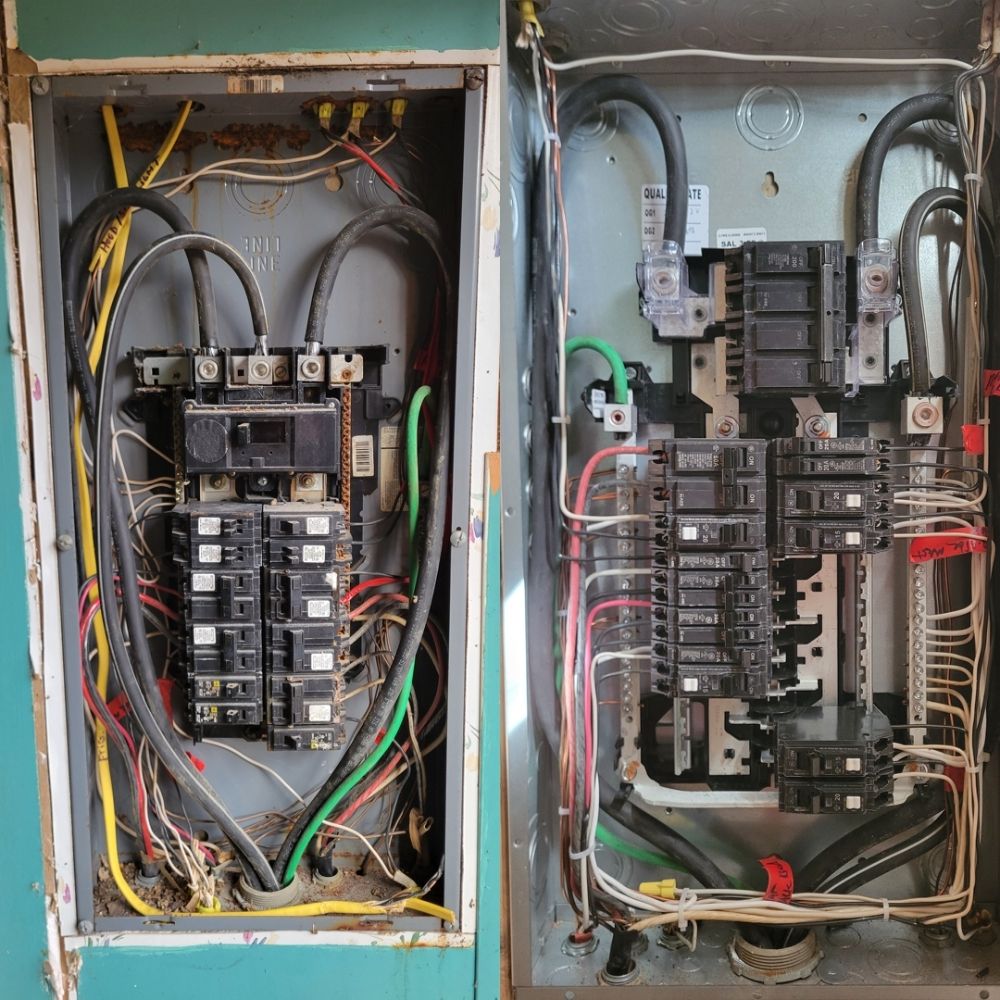
When your electrical panel actually needs to be replaced
Three signs that distinguish a worn-out panel from a one-off tripped breaker, plus the recall-class brands no inspector will leave alone.
Read full post
How to size a whole-home generator for a 3,000 sq ft Smokies cabin
A 30-minute load calc tells you whether you need a Generac 18kW or a 24kW. Here is how we run it on every install.
Read full post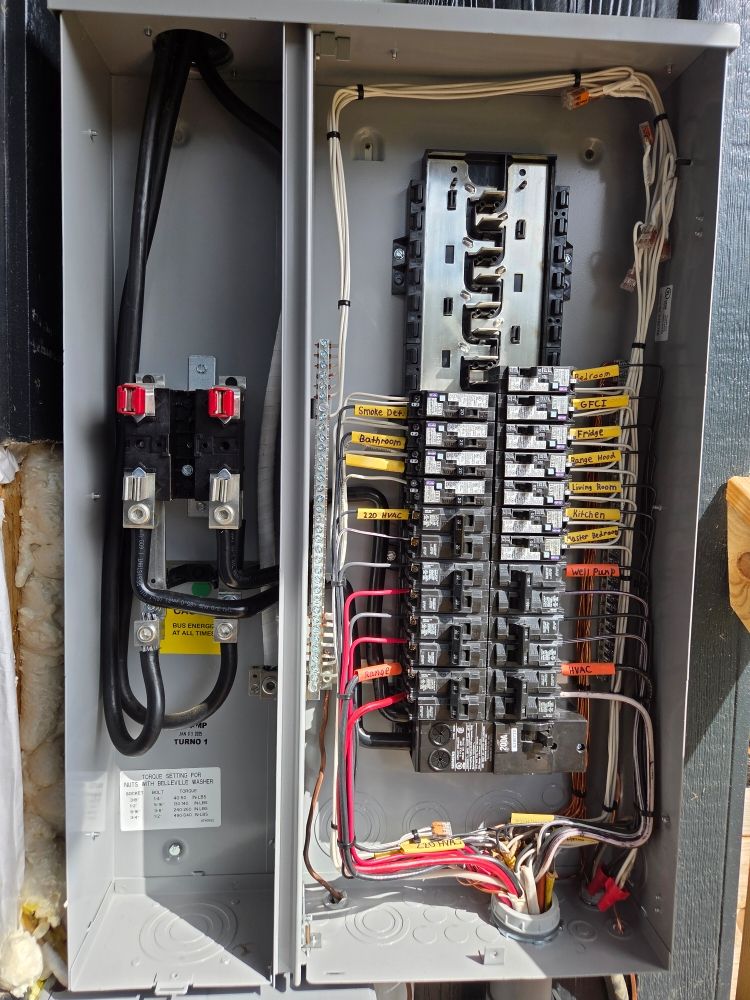
GFCI breakers and pre-1990s East Tennessee homes
Where code requires GFCI protection today, why your 1980s ranch is missing it, and what the retrofit actually costs.
Read full postQuestion this didn’t answer?
Email or call. We answer questions before we quote work.
If it shocks you, we got you. A licensed Tennessee electrician serving Sevierville, Knoxville, and the Smoky Mountains corridor since 2018.