Farragut electrical repairs, diagnosed before anything gets replaced
Breakers that trip in July heat, lights that flicker across three rooms, receptacles that quit after a lake-side storm. We find out why first, then fix the thing that is actually broken.
What the symptom usually means
Almost always a real overload rather than a failed breaker. Measure the draw at peak, then decide whether the answer is moving a load or adding a circuit.
Points upstream of any one fixture. A loose neutral at the panel or service is the version that matters, and it does not improve on its own.
Usually a GFCI tripped somewhere you forgot about, or a backstabbed contact that finally lost tension after twenty-odd years.
Move to the front of the schedule. Kill that circuit at the panel and call. Heat at a termination is the problem announcing itself early.
What breaks in west Knox houses
Most of Farragut went up between the early eighties and the mid two-thousands, and that dating tells you a lot before anyone opens a cover plate. Those subdivisions were wired quickly and to the code of their day, which means push-in back-wired receptacles are everywhere. The spring contact inside one holds fine for two decades, then relaxes, and the connection starts making heat instead of carrying current. That single failure mode explains a large share of the dead-outlet and warm-plate calls we take out here. The fix is unglamorous: pull the device, land the conductors on the screw terminals where they belong, and check the rest of the run while the wall is open.
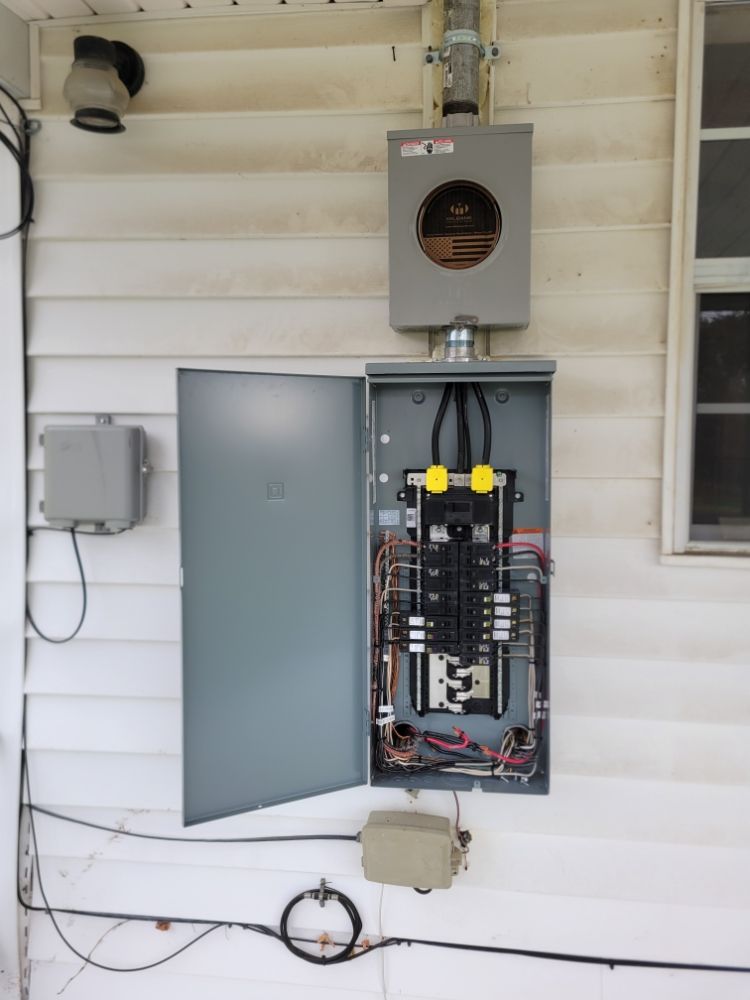
The oldest houses in the area occasionally turn up aluminum branch wiring, which sounds worse than it is. It does not mean a rewire. Aluminum expands and contracts more than copper, so terminations loosen over time, and the recognized repair is a proper connector at every device rather than tearing out drywall. We carry the right materials for that work. Insurers in Tennessee increasingly ask about it, and doing it correctly the first time settles the question permanently.
The other pattern is protective devices reaching the end of their service life. GFCI and AFCI breakers and receptacles are electronics, and electronics age. A twenty-year-old GFCI in a garage or on an exterior wall may still pass power while no longer tripping when it should, which is the worst possible failure because nothing looks wrong. Newer AFCI breakers do the opposite and nuisance-trip on shared neutrals that were perfectly legal when the house was built. Both are worth testing rather than assuming.
Weather, lake air, and July load
Summer storms roll across the Fort Loudoun Lake shoreline hard, and lightning does not need a direct strike to do damage. A near hit or a rough grid restoration after an outage sends a spike through the house that takes out whatever is most fragile: an HVAC control board, a garage door opener, a GFCI, sometimes a whole bank of low-voltage transformers. When we come out after a storm we replace what died, then look for evidence of the surge event that killed it. Replacing the same appliance three summers running is a sign nobody looked upstream.
Shoreline and lower-lot properties also fight humidity in a way ridge-top houses do not. Exterior receptacles corrode at the terminations, in-use covers crack and stop sealing, and moisture gets into boxes that were never flashed properly. Corroded connections make resistance, resistance makes heat, and heat is how a nuisance becomes a hazard. On a repair visit we open the exterior devices on the affected circuits because that is frequently where the fault is hiding.
Then there is July. When a condenser cycles on against a circuit already carrying a freezer, a well pump, or a shop tool, a breaker doing its job trips. Homeowners are sometimes told to install a larger breaker. That removes the protection sized to the wire in the wall and leaves the conductor unguarded, which is how a nuisance becomes a fire. We measure the actual draw during peak load and either rebalance what feeds that circuit or add capacity where the numbers justify it.
Diagnosis first, and honesty about limits
Every visit starts with testing rather than parts. Voltage and current readings under real load, a look at the panel for heat and loose terminations, and a circuit-by-circuit trace of whatever is misbehaving. Thermal imaging comes out when heat is part of the complaint, because a failing connection shows up in seconds on a camera and can hide for hours from a screwdriver. Only after we know the cause do we write the scope and the price.
Sometimes the honest answer is that this is not a repair. If a circuit trips because the house is asking more of the service than it was built to deliver, no amount of work on that circuit will hold, and you deserve to hear that plainly instead of paying for a fix that fails again in August. In that case the conversation moves to service and panel capacity. If the concern is riding out an outage rather than fixing a fault, standby generator work in Farragut is the better path. We would rather point you to the right job than sell you the wrong one.
Volt Pro Services is licensed in Tennessee and fully insured, and the electrician who diagnoses your problem is the one who repairs it and warranties it in writing. Nothing gets handed to a subcontractor halfway through. You can see finished work in our project gallery or read more about the rest of what we handle across Farragut. When you are ready, request a quote and we will schedule service around your day rather than ours.
How a repair visit runs
Four steps, same every time
Triage on the phone
What tripped, what smells, what stopped working, and when it started. Heat and burning smells get moved up the schedule the moment we hear them.
Testing on site
Readings under real load, a panel inspection for loose or hot terminations, and thermal imaging when heat is part of the picture.
The scope in writing
Once the cause is known you get the work and the price in writing, including the honest version if the answer turns out to be capacity.
Repair and verify
The fix, then testing again to confirm the original symptom is gone before we leave. Warranty is written, not implied.
Questions Farragut homeowners ask
My breaker trips every afternoon in July. Is the breaker bad?
What do flickering lights actually mean?
Half my kitchen outlets went dead. Is that an emergency?
Do I need a whole rewire if my house has aluminum branch wiring?
A storm came through and now something is dead. Is that related?
When is an electrical problem urgent enough to call immediately?
What if the repair turns out to be a capacity problem?
Tell us what it is doing
Describe the symptom and when it happens, and we will tell you whether it waits for a scheduled visit or needs the breaker off tonight. Request a quote and we will schedule service to fit your week.