Level 2 Charging Up The Mountain
Level 2 charger installs for Pittman Center homes and cabin rentals: conductors sized for the long runs this terrain demands, weather-rated mounting for outdoor parking, and permitted Sevier County work.
Out here the wire run is the whole job.
Drop a Level 2 charger into a subdivision garage and the hard part is choosing a color. Do it on a Pittman Center property and the hard part starts at the panel and ends wherever the car actually parks, which out here is regularly a hundred feet away and twenty feet downhill. Long runs are the defining condition of charger work in this part of Sevier County, and they are the reason a bid that sounds cheap over the phone so often turns into a charger that never quite delivers.
The physics are unforgiving and completely predictable. A Level 2 charger pulls thirty to eighty amps at 240 volts and holds it there for hours, and every foot of conductor between the breaker and the unit costs you a little voltage. Push that load down a long enough run of undersized wire and the car sees less than it should, charges slower than the label promised, and the homeowner spends a year assuming the charger is a lemon. It is not. The wire was too small for the distance. We measure the real cable path on your property, not a straight line on a sketch, and size the conductors to hold voltage at the far end.
Then there is where the charger lives. A great many properties around Pittman Center have no enclosed garage at all. The car sits under a carport, beside the house on a gravel pad, or on a leveled shelf cut into the slope. That is a perfectly good place for a charger as long as it is built for weather from the start: an outdoor-rated unit, weatherproof enclosures at every termination, conduit rated for wet locations, and a mounting height that keeps the connector out of snow and off the ground. Where there is no wall to mount to, we set a post. What we do not do is put an indoor-rated unit outside and hope the eave covers it.
Rental cabins change the brief.
A real share of the charger work in this community is not somebody wiring up their own commute. It is an owner adding an amenity to a short-term rental, and that is a different set of decisions even though the circuit itself is identical. The person plugging in has never been on the property before, will arrive after dark, and will park whichever way they feel like parking.
So the charger goes where an unfamiliar driver can find it without a flashlight, near the parking area rather than tucked around a corner. The cable gets specified long enough to reach a port on either side of a vehicle, because you do not get to tell a guest which direction to pull in. A holster goes on the wall so the connector never ends up lying in gravel. And most owners want a unit with some form of access control or usage reporting, so the charger is an amenity they offer rather than a meter running unattended between bookings. We install units that do that and units that do not, and we will tell you plainly which one fits how you rent.
Volt Pro Services is licensed in Tennessee and fully insured, and the licensed electrician who pulls the Sevier County permit is the one who runs the circuit, terminates the charger, and walks it with you at the end. Same person, start to finish. The warranty is written down.
A charger that reads slow is almost never a broken charger. It is usually wire that was too small for how far it had to go.
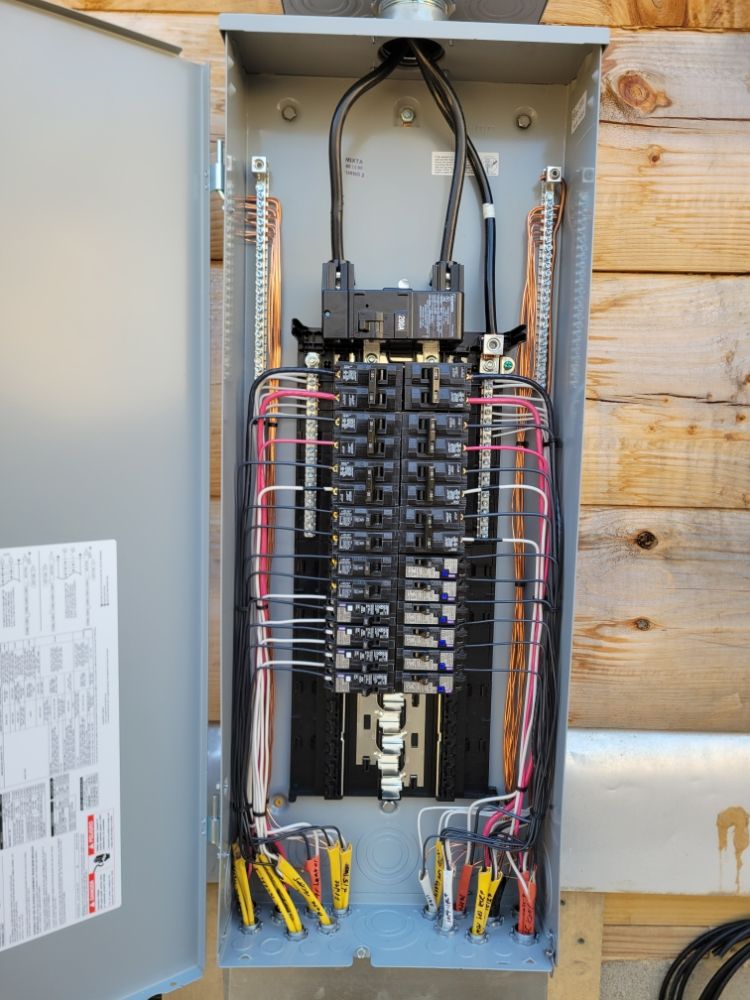
Six steps, no surprises in the middle.
Walk the property
We find where the car really parks, where the panel is, and what the cable path between them looks like. On a sloped Pittman Center lot that walk decides most of the job.
Measure and size
The measured run distance sets the conductor size, not a rule of thumb. We calculate voltage drop for your actual length so the charger delivers what it is rated to deliver.
Spec and permit
You pick the unit or we recommend one for the car and the use. We file with the Sevier County building department and set the install date before anything is ordered.
Run the circuit
A dedicated 240V circuit end to end: conduit where it is exposed, wet-rated materials outdoors, sealed penetrations, and a trench cut to depth where the run crosses open ground.
Mount and weatherproof
The unit goes on a wall, a carport column, or a set post, at a height that keeps the connector clear of snow. Every termination gets an enclosure rated for what the weather does here.
Inspect and hand over
The inspector signs off, we verify draw under real load, label the panel legibly, and walk the system with you or your property manager. Written warranty, permit certificate, done.
What else we handle at the same address.
Charger work rarely arrives alone. Whether your service has the headroom for a fifty-amp continuous load is a question we answer with a load calculation, and where the answer is no, panel upgrades in Pittman Center is the page that covers what that involves. Owners who lose power for days after an ice storm ask us about home generators in the same conversation. Long driveways and outdoor parking make lighting installation a natural companion to an outdoor charger, and when something on an existing circuit is misbehaving, electrical repairs is where to start. The full local picture lives on our Pittman Center service page.
We reach Pittman Center out of Sevierville and cover the whole upper end of the county alongside it. Tell us what you drive and where it parks and we will give you a free quote with the run length priced in. Reach us through the contact form or see finished installs in the gallery.
Straight answers.
How far can the charger sit from the panel?
I rent my cabin out. Should the charger be different?
Can the charger be mounted outdoors here?
Do I need a permit in Sevier County?
Which charger brand should I buy?
How long does the install take?
Is the work licensed and warrantied?
Free charger quote.
Call and we will come out, measure the run, and write a real scope for your Pittman Center property. No deposit, no pressure. Request the free quote or look through finished work first.