Light The Drive, Leave The Neighbors Dark
Exterior lighting for Seymour homes and subdivided farm parcels: post lights down a long drive, fixtures along a fence line, power and light out to a barn or detached garage, and yard lighting on lots where the house next door sits close enough to notice every fixture aimed the wrong way.
Distance from the panel decides more than the fixture does.
Most outdoor lighting calls begin with a fixture somebody has already picked out. We start somewhere less exciting: how far is it from the panel, and what else sits along the way? On a quarter-acre lot in one of Seymour’s newer subdivisions, the answer is short and the job is mostly about placement and aim. On an older farm property that has been split up, with the house set well back from the road and a barn or shop behind it, the answer can be a long way. That distance changes the wire, the route, and sometimes whether the job belongs on a circuit you already have at all.
Post lights at the end of a long run
Every foot of conductor costs a little voltage. Electricians call it voltage drop, and on a short run to a porch light nobody ever notices it. On a long run to a gate post or the far end of a drive, an undersized wire hands the fixture less voltage than it was designed for. You see that as lights that look dim next to the ones by the house, LED drivers that flicker or quit early, and a conductor that runs warmer than it should. The cure is decided before the trench is dug: we add up the load, measure the distance, and size the wire so the last post gets what the first one gets. Upsizing after the backfill means digging the whole thing up again.
Wet locations and what goes in the ground
Outside, everything lives in the weather. Boxes and covers have to be rated for wet locations, and a receptacle that will have something plugged in for weeks at a time gets an in-use cover that stays closed around the cord. Outdoor receptacles get GFCI protection, which shuts the circuit off when current leaks somewhere it should not, such as through a cracked fixture housing or a splice that took on water. Buried runs go in conduit or in cable rated for direct burial, at a depth set by the wiring method and by what sits on top, whether that is lawn, a gravel path or a paved drive. We plan the route with you before anyone digs, because a run that crosses under a driveway gets built differently from one that follows a fence.
Photocell, timer or motion
The control decides how the lighting feels to live with. A photocell switches lights on at dusk and off at dawn, which suits post lights and the lantern at the drive entrance that should simply be on whenever it is dark. A timer fits lighting you enjoy in the evening and want off at a set hour, such as fence-line accents or a lit path to the back door. Motion sensors belong at outbuildings, side yards and the walk to a detached garage, places where light only matters while somebody is there. Plenty of properties end up using all three on separate circuits or switches, and that is a sensible result.
Close neighbors and where the light lands
In a subdivision where houses sit close together, glare is the complaint we hear most. An unshielded floodlight on a garage corner lights your driveway and your neighbor’s bedroom window alike. Shielded fixtures, lower output and a beam aimed down at the ground you need to see fix most of it. We would rather set two modest fixtures where they do real work than mount one harsh flood that washes out the street and makes your own yard harder to read past the glare. Light that stays on your property is also light you are not paying to throw over the fence.
Tap the existing circuit or run a new one
Many homes already have an exterior circuit feeding a porch light or an outdoor receptacle, and tying new lighting into it is the obvious move. Sometimes it is the right one. Other times that circuit is already carrying more than it looks like, or it is shared with a bathroom or the garage, or it sits behind a GFCI that trips every time it rains hard. We check what is already on the circuit and tell you plainly whether tapping in is sound or whether a dedicated run will spare you the nuisance trips.
On the visit itself, we walk the route with you, in daylight when we can, and talk about where each fixture goes, where the wire can travel without crossing a future fence post or garden bed, and where the circuit starts. Then you get a free quote that spells out the fixtures, the run and the controls, with the reasoning behind each choice. Permitted work goes through Sevier County, and we pull the permit and coordinate the inspection so you never have to call anyone.
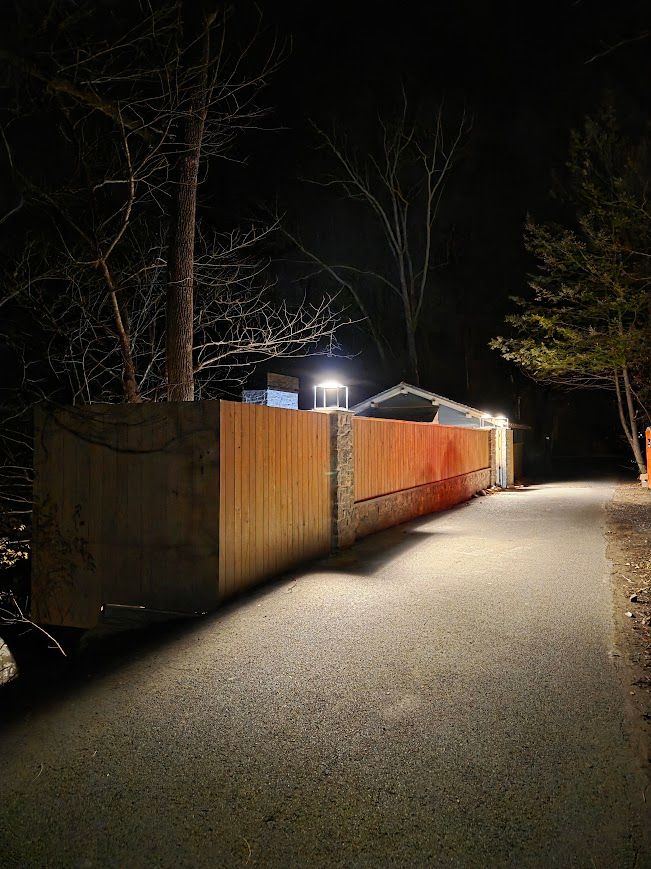
Outdoor circuits rarely stop at the yard.
Exterior lighting has a way of turning into a bigger job once the trench is open. If you want light and power at a barn or shop at the back of the property that is still being built, the feed and any sub-panel belong with new construction electrical so the building is wired once. If the house itself needs more circuits to carry what you are adding, residential electrical work in Seymour covers the panel side. And if the lights you already own flicker, trip or die on wet nights, start with electrical troubleshooting before anything new goes on that circuit.
Inside the house, pendants, chandeliers and dimmed fixture layouts are their own kind of work, and they live on our custom lighting page for Seymour. You can read how we approach exterior jobs in general on the outdoor lighting service page, see what else we handle locally on the Seymour service area page, look through finished installs in our project gallery, or tell us about your property and how far the light needs to reach.
Lighting work is scheduled ahead, and we confirm the visit before we head out.
What people ask about lighting outside.
Why do the lights at the end of my drive look dimmer than the ones by the house?
Can you add lights to the outdoor circuit I already have?
Which works better outside, a photocell, a timer or a motion sensor?
My neighbor says my floodlight shines into their house. What can be done?
Can you light the deck stairs and the walk out back?
Can you run power and lights out to a barn or shop?
Show us the dark spots.
We will come out, walk the drive, the fence line and the outbuildings with you, and give you a free quote once we know the distances and the loads involved. Rather start in writing? Send us the details along with a rough sketch of the property.