Stop The Spike At The Panel, Then Again At The Plug
Cabins and rentals along the TN-321 corridor sit a long way from the nearest substation, and power quality after a storm can be rough. We install a whole-home surge protective device at the panel, check the grounding it depends on first, and add plug-in protection where a rental keeps its expensive boards and screens. The panel device covers every circuit. The second layer covers the gear you would hate to replace in the middle of a booked season.
The far end of a long line gets the rough power.
A house in town usually sits close to the utility equipment that feeds it, on a short run shared with its neighbors. A cabin up the valley often hangs off the far end of a long line that winds through trees and over ridges to reach it. Every stretch of that line is another place for lightning, a falling limb or switching on the utility side to put a spike onto the wires. Wears Valley is a long way from the nearest grid substation, which is a big part of why power quality can turn rough after a storm. Your panel is where those spikes arrive first, so that is where we start.
What a panel device actually does
A whole-home surge protective device, called a Type 2 SPD, mounts at or beside the main panel on its own breaker. When voltage on the line jumps past its threshold, it shunts the excess to ground in a fraction of a second, so the spike takes a shorter, easier path than the one through your furnace board or the refrigerator. One device covers every circuit fed from that panel. It has limits too, and we tell you about them up front. A direct lightning strike to the cabin or the line right outside carries more energy than any panel device can absorb. Surges that start inside the house, from a well pump or an HVAC compressor cycling on and off, can reach a nearby outlet without ever passing through the panel device. That is why we talk about a second layer.
A second layer for the gear a rental runs on
Inside a vacation rental, some equipment matters far more than its price tag suggests. The control board on the heat pump, the well pump controller, the smart lock on the front door and the TVs guests expect to work are the things that turn a storm into an unhappy call from a guest. Point-of-use protection sits right at those devices: a quality plug-in protector for the TV and router, and protection at the HVAC equipment and pump controls where it fits. The panel device takes the big hit from outside, and the point-of-use units clean up what is left plus anything generated inside the cabin. We walk through the place with you, list what is worth protecting, and leave the bedside lamp alone.
Grounding comes before the surge device
A surge device can only send a spike somewhere useful if the path to ground is solid. That path runs through the grounding electrode conductor, the ground rods driven outside, and the bonding that ties metal water piping and other systems back to the panel. On older cabins, and on seasonal places that have been converted to year-round living, it is common to find a ground clamp rusted loose, a rod that was never connected, or a bond that went missing during a plumbing change. Installing an SPD on top of that wastes your money. So the first part of the job is testing the grounding and bonding, tightening or replacing what needs it, and confirming the neutral and ground connections inside the panel are sound. Then the device goes in.
After a storm, when a guest says things are dead
The call usually comes through the owner or the manager: the guest says the TV will not turn on and the internet is down. Before anyone drives out, a few checks sort it. Is the whole cabin dark, or only some devices? If everything is out, the power company may still be restoring the line, and neighbors being dark too points that way. If only some things are dead, look at the breakers and press the test and reset buttons on the GFCI outlets in the kitchen, the baths and outside. Many whole-home surge devices have a status light, and if it is off or showing a fault, the device did its job and needs replacing. Write down what failed and send us a photo of the panel and the device. That tells us where the surge got through.
Matching the device to the panel you have
Cabins in the valley run on everything from an aging 100A panel to a recent 200A service rebuild. The surge device has to suit the panel. It needs breaker space of its own, a short and straight lead to the bus so it works as rated, and a mounting spot where the status light can be seen without a flashlight and a ladder. When a panel is full, we look at whether the panel allows a tandem breaker or whether the panel itself is due. If a service upgrade or a generator hookup is already on your list, adding surge protection during that work saves a second visit. Every install gets labeled in the panel, tested, and explained to whoever manages the property.
The visit starts with the panel. Text or email a photo of the open panel, the label on its door and the area around the main breaker, and tell us what failed in the last storm if anything did. On site we test the grounding, check the bonding and confirm there is room for the device. You get a free quote that lists the panel device, any grounding repairs and the plug-in units we suggest for the rental, with the optional items marked. Permitted work goes through Sevier County’s building department, and we handle the application and the inspection.
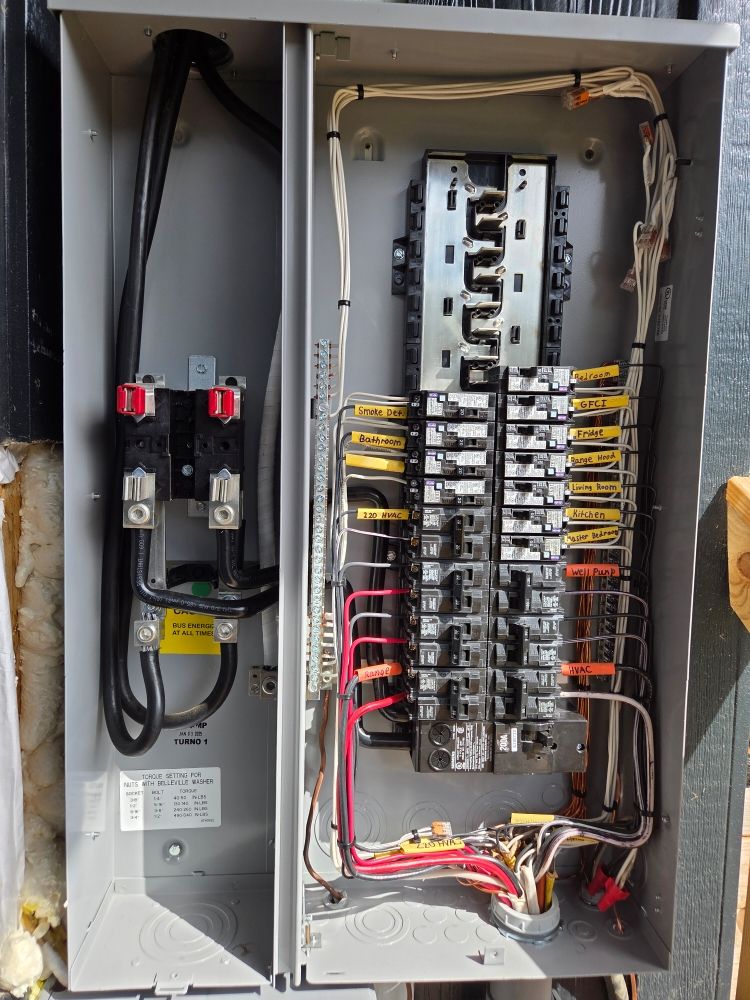
Where surge work meets the rest of the cabin.
A storm that sends a surge through the wires can also leave real hazards behind. If you smell burning or see sparks after the power comes back, that belongs with electrical emergencies in Wears Valley. If the same storm left the drive pitch dark for guests arriving late, motion lighting for Wears Valley cabins covers the fixtures and sensors outside.
Owners adding charging for guests should plan the surge device and the charger together, which is part of commercial EV infrastructure in Wears Valley, and fixture work inside falls under custom lighting in Wears Valley. Our surge protection service page covers the work in general, the Wears Valley page lists everything else we handle there, and the gallery shows panels we have finished. When you are ready, send us the panel photo.
Surge installs are scheduled ahead so we can confirm panel space and grounding before we arrive.
What owners ask after a storm.
Will a whole-home surge device protect against lightning?
Do I still need plug-in protectors if I have one at the panel?
Why do you check grounding before installing the device?
How do I know if the surge device is still working?
A guest says devices died after a storm. What should I check first?
Can you add surge protection when we upgrade the panel?
Send us the panel before the next storm.
A clear photo of the open panel, the label on the door and a note about anything that failed recently is enough to begin. We check the grounding, the room for the device and the gear worth protecting, then send a free quote with each item explained. Send the panel photo, or dial Volt Pro and walk us through the cabin.