Light The Walk From The Car To The Cabin Door
Plenty of cabins in the valley sit at the end of a long drive with a parking pad below the porch, and guests often pull in after dark with luggage and no idea where the steps start. We wire motion lighting that comes on for the people walking up, ignores swaying branches and passing animals as far as a sensor can, keeps its light on your property, and stays off in daylight.
The hardest part of a night arrival is the walk from the car.
Picture a guest who drove in along TN-321 after dark, followed a phone map up a winding drive, and parked on a pad below the cabin. The headlights go off. Now they have to find the steps, carry bags up them, and punch a code into a lock they have never seen, with trees blocking whatever moonlight there is. Motion lighting can make that walk easy, provided it is aimed and tuned so it is not clicking on all night for every animal and gust of wind, which the owner would hear about from the guests.
Lighting the drive, the pad and the steps
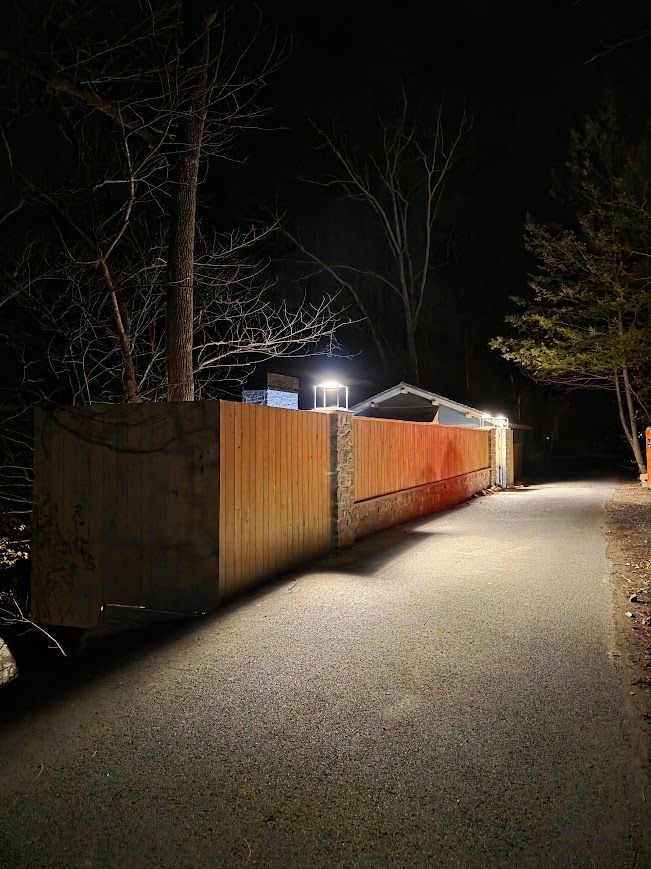
We start where the car stops. A fixture covering the parking pad lets a guest see the ground they are stepping onto and the trunk they are unloading. From there the light follows the path: the first step, any turns in the walk, the stairs up to the porch, and the door with its lock. Steps get the most attention, since uneven stone and wooden treads are where people trip. On a long drive we look at whether a few low fixtures along the edge, or a light on a gate post or pillar at the entrance, would help a guest find the turn in the first place. What we want is a continuous path of light with no dark gap halfway between the car and the door.
Sensors that ignore the wildlife and the wind
Most outdoor motion sensors read changes in heat across their field of view. A person walking up the drive sets them off, and so can an animal crossing the yard, a branch moving against a warmer background, or the engine of a car that just parked. In a wooded valley those false triggers add up fast. We cut them down by aiming the sensor along the path instead of across the open yard, keeping sensitivity no higher than the spot needs, and choosing sensors with adjustable zones or masking so the tree line falls outside the detection area. Mounting height and the tilt of the head matter as much as the sensor model. We set and test after dark, walking the path ourselves, and keep adjusting until it catches people and mostly leaves the animals alone.
Light on your property, off the neighbors and the sky
Wears Valley is one of the quieter mountain corridors in Sevier County, and a bright floodlight pointed down the hill is the fastest way to irritate everyone who can see it. We choose shielded fixtures that send light down onto the ground and the steps, and we keep beams from crossing property lines or shining into a neighbor’s windows. Warmer color temperatures look better against wood and stone, and they feel gentler on eyes that have adjusted to the dark. Motion control helps here too. A light that sits off most of the night keeps the valley dark and only comes on when someone is actually there.
Photocell and motion working together
A motion light that fires in daylight wastes power and wears out the fixture. Pairing a photocell with the motion sensor keeps the fixture off during the day, so motion only matters after dusk. Some owners want a low, steady glow on the pillar lanterns or the porch light from dusk until a set hour, with full brightness held back for motion. Many fixtures and controls support that mode. We also set the on-time so the light stays on long enough for a guest to unload a car and climb the stairs, and short enough that it is not burning for nobody.
Wiring runs to gate posts, pillars and outbuildings
The fixtures that help most are often the ones farthest from the house: a pillar at the entrance, a gate post, a lamp near a shed or a garage down the slope. Each one needs a buried circuit or a run in conduit, sized for the distance so the lights at the far end do not burn dim, and protected where it rises out of the ground. Every outdoor box and fixture we use is rated for wet locations with covers that seal, and outdoor circuits get the ground-fault protection they require. On mountain lots, rock and roots decide the trench route, so we walk it with you before committing to a path. Permitted work goes through Sevier County’s building department.
The visit works best near dusk, because that is when you see which parts of the drive are really dark. We walk from the parking pad to the door, note where the steps and turns are, and look at the fixtures and switches already there. Tell us how guests usually arrive and where they park. Then you get a free quote listing each fixture, sensor and run, with any optional pieces marked. If you already have outdoor fixtures you like, we can often add sensors and photocells to them instead of replacing everything.
Other work that tends to ride along with the drive.
Inside the cabin, the matching job is custom lighting in Wears Valley, from a statement fixture in the great room to deck lighting that keeps glare off the glass. Outside, a parking pad being lit for guests is also the natural spot for a charger, which falls under commercial EV infrastructure in Wears Valley.
Storms that damage outdoor circuits can bring surges and outages with them, so the panel side belongs with surge protection for Wears Valley properties, and a burning smell or a sparking fixture belongs with electrical emergencies in Wears Valley. Our motion lighting service page covers sensor types and fixtures in general, the Wears Valley page lists the rest of our local work, and the gallery shows outdoor jobs we have finished. When you are ready, tell us about the drive.
Outdoor lighting jobs are booked ahead so we can plan trench routes and fixtures before we arrive.
Before you wire the drive.
Why does my motion light keep turning on with nobody there?
Will motion lights bother my neighbors?
Can a light stay dim all evening and brighten for motion?
Can you run lights to a gate post or a shed far from the cabin?
How long should the light stay on after it triggers?
Can you add sensors to the outdoor fixtures I already have?
Show us the drive after dark.
Take a photo or a short video from where guests park, at night, and tell us where the steps and the door are. We will plan the fixtures and sensors from there and come back with the reasoning for each one. Send the night photo, or dial Volt Pro and describe the walk up.