When The Alarm Sounds Or The Pump Will Not Start
Trouble calls on a Boyds Creek property have their own flavor: a septic alarm that keeps sounding, a well pump that stays off after an outage, a porch that goes dark along with the bathroom, a breaker that lets go only on cold mornings. We listen to what happened, test the circuit, trace the fault to where it starts, explain it in plain terms, and then fix it.
On a well and a septic tank, a dead circuit is more than a nuisance.
In town, a failed circuit usually means a dark room until somebody gets to it. Out here, many properties make their own water and move their own wastewater, and both of those jobs run on electricity. When the pump circuit or its controls quit, the house stops working in a hurry. So rural troubleshooting starts with a few questions about what the property depends on, and a pump or alarm problem gets treated as more than a routine visit. Most calls in Boyds Creek reach us the same day or the next morning.
The septic alarm that keeps going off
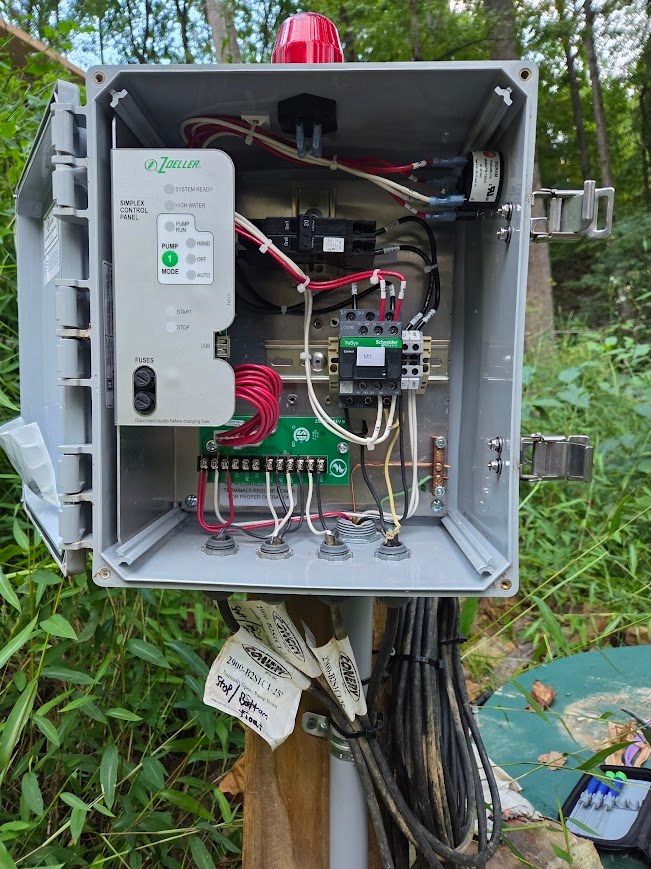
A septic system that pumps effluent to a drain field has a control panel near the tank, with a pump circuit, a set of float switches and an alarm that sounds when the level climbs too high. When that alarm will not stop, the electrical side is one of several suspects. The pump breaker may have tripped. The contactor that switches the pump may have burned contacts. A float may be tangled, or its wiring may have failed at a splice in the riser. On many panels the alarm and the pump are fed by separate circuits, so the alarm can sound while the pump has no power at all. We test each piece in order. If the pump runs, draws what it should and the floats respond, the trouble is in the tank or the line, and we tell you to call your septic company rather than guess.
A well pump that stays off after the power comes back
Power returns after a storm, the lights come on, and the faucet stays dry. Several things on the electrical side can do that. The double-pole breaker for the pump may have tripped while the line was unstable. The pressure switch contacts may be pitted or burned so they no longer close, or the switch may have dropped below its cut-off and need a manual restart on models with a lever. Pumps with a separate control box carry a capacitor and a relay that can fail. We check voltage at each point between the panel and the wellhead and measure what the motor draws when it tries to start. If everything up top tests good and the motor down the well is the problem, that job belongs to a well contractor, and we say so plainly.
One tripped outlet that darkens the porch and the bath
A GFCI receptacle protects itself and every outlet wired after it on the same circuit. In older farmhouses that have been added onto over the years, those chains can run in odd directions. A common example is a front porch receptacle fed through a bathroom GFCI, so a little moisture at the porch shuts off the bathroom outlets too, and nobody connects the two. Finding the protecting device is half the job. The other half is learning why it tripped, because a GFCI is doing its job when it trips on real leakage. We test the downstream outlets with loads unplugged, check the covers and boxes that face the weather, and when it makes sense, rearrange the protection so a porch problem stays on the porch.
A breaker that trips under one particular load
Some breakers hold all day and then let go at the same moment every time. A heat pump air handler breaker that trips only on the coldest mornings, when the backup heat strips kick in, is a classic case. So is a shop circuit that drops whenever the air compressor starts, or a kitchen circuit that trips with the toaster oven and the kettle running together. The pattern points at the load. We measure current with that load running, compare the wire size against the breaker, and inspect the breaker and its connection at the bus for heat. Sometimes the answer is a weak breaker. Sometimes the circuit was never sized for what it carries now and needs a dedicated run.
Flicker at the end of a long run
Homes built on old farm ground often have a second structure fed a long way from the meter: a detached garage, a shop, a small guest house. Long runs lose voltage, and wire sized years ago for a light and an outlet may not keep up with what that building runs today. Lights that dip when a tool starts out there, or flicker on windy days, can mean undersized conductors, a loose neutral or a splice starting to fail. A loose neutral needs fast attention, since it can push voltage up on one leg and damage electronics. We measure voltage at both ends under load, then decide whether a connection needs repair or the feeder needs replacing.
How a call goes: listen, test, trace, explain, fix
Every troubleshooting visit runs in the same order. We listen first, because what you saw and when you saw it narrows the search. Then we test, with meters on the circuit instead of assumptions. We trace the fault back to where it starts, which is often well away from where the symptom shows up. Before any parts get swapped, we explain what we found in plain words and show you the burned contact or the loose wire when we can. Then we fix it, or hand you a free quote first when the repair is bigger than the visit.
Once the cause has a name.
A diagnosis often turns into other work. A house whose circuits keep running out of room usually needs more capacity, which falls under residential electrical service in Boyds Creek. If one storm took out several boards at once, a whole-home device from surge protection in Boyds Creek keeps the next one from doing the same. A new shop or outbuilding should get its feed sized correctly from the start through new construction electrical, and flicker on new LED fixtures is often a dimmer pairing we sort out under custom lighting.
For our general approach to diagnosis, read the electrical troubleshooting service page. The Boyds Creek area page covers the rest of what we do locally, and the project gallery shows completed work. If writing it out is easier, describe the problem on our contact page and we will phone you.
Questions from homes on well and septic.
Is a septic alarm an electrical problem or a tank problem?
Can I silence the septic alarm and wait?
Our well pump did not come back after the power returned. What can I check?
Why do the porch outlets go dead with the bathroom outlets?
Why does our well pump keep clicking on and off?
What if the problem turns out not to be electrical?
Tell us what stopped, and when.
Tell us whether the trouble sits with the well, the septic panel or the house circuits, and add a photo of the panel if it is handy. We come out, find the cause and explain it before anything bigger happens, and repairs past the diagnosis get a free quote first. Send the details through our contact form, or dial Volt Pro and talk to the electrician.