One Device At The Panel For Everything Downstream
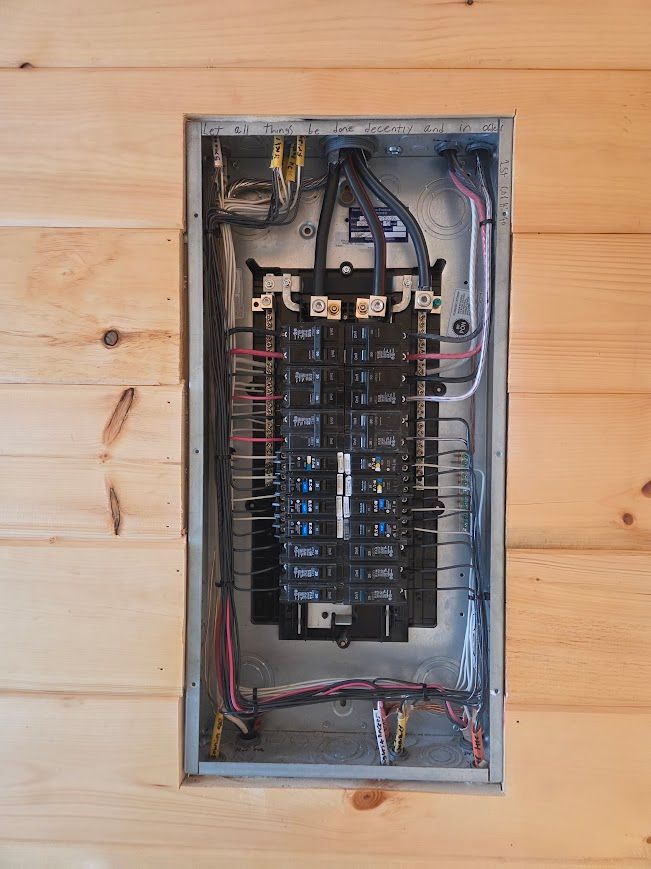
Boyds Creek properties run a lot of equipment nobody thinks about until it quits: the well pump, the septic pump panel, the heat pump’s control board, the range and the router. We install a whole-home Type 2 surge protective device at the main panel, test the grounding it relies on while we are there, and tell you plainly what it covers and what it leaves to a second layer.
A long rural line brings more than power to the panel.
Homes in Boyds Creek are fed by service that crosses a lot of open country before it ever reaches the meter. Older farmhouses, newer homes built on former farm parcels and the shops beside them all hang off that kind of run. Lightning that hits the line somewhere down the road, a limb that brushes it in the wind, and the utility switching circuits back on after an outage can each push a short burst of voltage down the wire. Inside your house, the panel is the first place that burst arrives, so the panel is the right place to meet it.
The boards that quit first on a working property
Modern equipment leans on small electronics that tolerate very little. A heat pump or furnace runs on a control board about the size of a paperback. The well pump may have a controller, or a pressure switch whose contacts pit when voltage jumps. A septic system that pumps to a drain field has its own control panel with a contactor, float circuits and an alarm. The range, the washer, the dishwasher and the refrigerator all carry boards now, and so does the router that keeps the house online. When a spike gets through, these are the parts that fail, and on a rural property several of them sit on the equipment that supplies water and handles wastewater. A dead TV is an inconvenience. A dead well controller means no water until a part shows up. That ranking is how we decide what deserves attention beyond the panel device.
Why a strip behind the TV falls short by itself
Plenty of houses rely on plug-in strips and call the job done. A strip only protects what is plugged into it. The well pump, the heat pump, the range and the septic panel are hardwired, so a strip in the living room never sees them. Strips also wear out quietly. The part inside that absorbs a spike gives up a little each time, and many cheap strips keep passing power long after their protection is spent, with no sign on the outside. We still like a quality point-of-use protector behind the TV, the computer and the router, because a panel device lets a small remainder through and some spikes start inside the house when big motors cycle. Order matters here. The panel device takes the large hit for the whole service, and the strips clean up what is left at the few devices that need it.
Grounding and bonding get tested on the same trip
A surge device works by giving excess voltage an easy path to earth. If that path is weak, the device has nowhere useful to send it. Before we mount anything, we follow the grounding electrode conductor from the panel to the rods, check that the clamps are tight and free of rust, and confirm the metal water piping and any other required systems are bonded back to the service. Older services were often installed with a single ground rod, and over the years a rod can end up under a later porch or cut loose during a siding job, while an added room may have been tied in without its bond ever being restored. Inside the panel we confirm neutral and ground are joined where they should be and kept apart where they should not. Anything that needs repair gets listed in your free quote beside the device, so you see the whole job before we start.
Generators, subpanels and the shop across the yard
A lot of Boyds Creek properties have more than one panel: the main in the house, then a subpanel in a detached garage, a barn or a workshop, sometimes at the end of a long feeder across the parcel. One device at the main panel covers the circuits it feeds directly, but a building fed from a distance can pick up disturbances of its own, so a shop with a compressor, a welder or expensive tools may deserve a second device at its own panel. Standby generators bring their own planning. We are a certified Generac installer, and when a generator and transfer switch are part of the job we place the surge protection so the house is covered on utility power and generator power alike. If a generator or a service upgrade is already on your list, schedule them together and the panel only has to come open once.
What the panel device leaves to the equipment
A device at the main panel only sees what arrives through that panel. Plenty on a rural property sits past it. The well pump hangs at the bottom of a long wire run down the casing, and its controller or pressure switch sits at the far end of a circuit that can pick up a disturbance of its own between the house and the wellhead. The septic control panel out in the yard, often on a circuit of its own, holds parts that handle a spike poorly. A detached shop fed by a separate run, whether from its own meter or a long feeder, may never see the house device at all. For these, protection mounted at the equipment is the second layer: a small surge device at the pump controller, at the septic panel, or at the shop’s own panel. We name each piece in the free quote and leave off any that do not earn a place.
Surge jobs are booked ahead so we can confirm breaker space before we arrive, and most calls in Boyds Creek get a truck the same day or the next morning. Where a permit applies, we pull it through Sevier County’s building department and take care of the inspection.
The jobs that usually go in alongside it.
Surge protection rarely shows up alone. If the panel is a 100A unit with no open spaces left, the better first move may be the service upgrade, which is part of residential electrical work in Boyds Creek. A house going up on open ground is the easiest moment to plan protection, and new construction electrical puts the device on the panel schedule before the walls close.
If boards are already failing and nobody is sure a surge did it, start with electrical troubleshooting in Boyds Creek so we find the real cause first. LED drivers and dimmers are sensitive too, and that fixture work lives under custom lighting for Boyds Creek homes. Our surge protection page explains the service in general, the Boyds Creek service area page lists the rest of our local work, and the gallery shows panels we have finished. When you are ready, ask for a free quote.
Surge questions from acreage owners.
Does a surge device at the main panel cover my well pump?
Our shop runs off its own subpanel. Does it need a second device?
Can a surge damage the septic pump control panel?
Will a surge device stop my breakers from tripping in storms?
We have a barn on its own meter. Does the house device protect it?
How does surge protection work with a standby generator?
Put the device in while the weather is calm.
Tell us about the property: the panel size if you know it, whether you are on a well and a septic pump, and whether a generator or a shop panel is part of the picture. We look at the panel and the grounding, then hand you a free quote with every item spelled out. Request it through the contact page, or dial Volt Pro and talk it through.